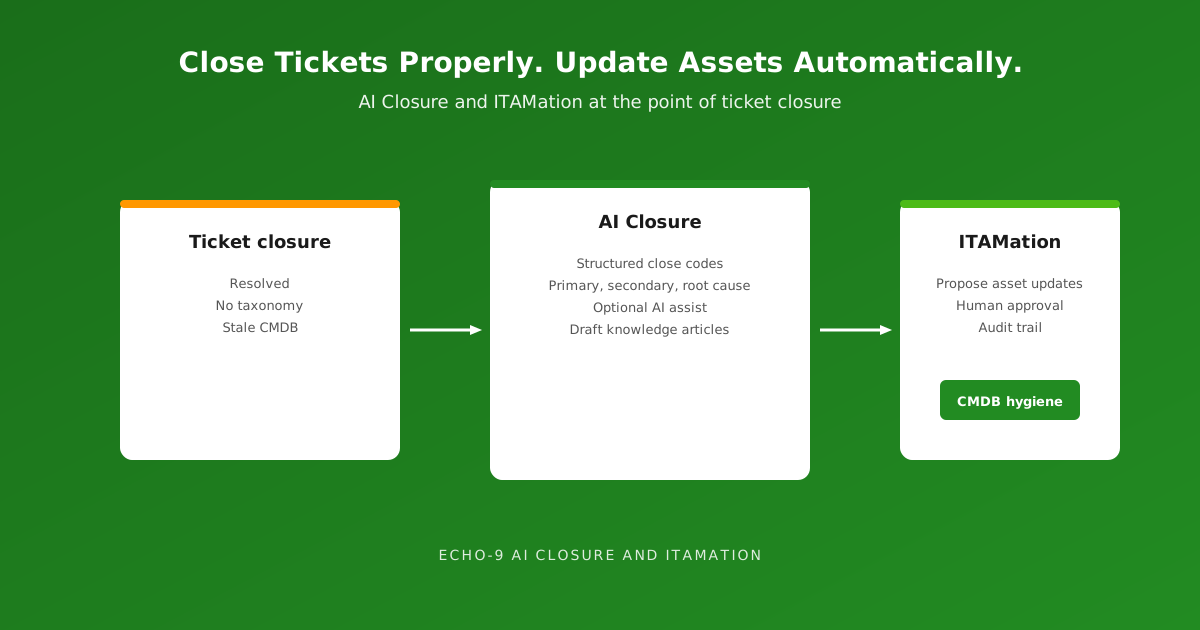
The ticket closure data gap
Native GLPI solution types are flat. Teams close tickets with "fixed it" or "resolved" and move on. Reporting on root causes, hardware outcomes and resolution patterns becomes impossible. Meanwhile, the CMDB drifts: assets stay assigned to users who left, location changes from desk moves go unrecorded, and software installed during an incident never appears in inventory.
Quality collapses at the exact moment the organisation most needs clean data — when the work is done and the analyst is ready to close the ticket.
Structured close codes and why they matter
AI Closure and ITAMation makes ticket closure the control point for service intelligence. Every solution carries a primary, secondary and optional root cause classification that is consistent, reportable and entity-aware.
Enforcement runs in PHP — dependent dropdowns, minimum solution length and category rules — so validation never depends on AI being online. Quality improves from day one, even before you enable a single model.
This matters for audit and leadership reporting: you can answer which root causes dominate, which categories drive volume, and whether hardware outcomes trend toward repair, replacement or scrap — not guess from free-text notes.
AI-assisted resolution summaries
Optional "Analyse with AI" on the solution form suggests taxonomy codes and resolution text — but suggestions must pick from live taxonomy IDs, not invented labels. Technicians confirm what is saved. AI-generated content is labelled for transparency.
Default inference path is local Ollama via Sovereign AI, with PII redacted before any call. Cloud providers are opt-in. The plugin does not auto-close tickets from AI output — humans approve what is recorded.
ITAMation: asset updates proposed at closure
When a ticket involves hardware swap, user change, location move or software install, ITAMation proposes the corresponding asset update at closure — pending disposal, return to stock, reassign user, update location. Assets change only after analyst approval, with a before/after preview.
This is propose-then-approve ITAM: CMDB accuracy improves as a by-product of normal service desk work, not a separate data quality project that nobody has time for.
Knowledge capture without auto-publishing
Eligible closed tickets can generate draft knowledge articles from resolution patterns. Humans publish — AI never auto-publishes. This connects repeat incident deflection (see our ProblemAI article) with sustainable knowledge creation at the point of resolution.
Rollout in stages
- Taxonomy first — load or edit closure codes and turn on enforcement. No model required.
- AI when ready — point the plugin at Sovereign AI or an approved gateway. Technicians still confirm.
- ITAM proposals — map codes to pending asset actions. Approvers apply or reject.
- Knowledge capture — enable draft article synthesis once eligibility and PII policy are agreed.
Feature flags default off for AI, ITAM and knowledge. Enable capability in stages as confidence grows.
The bottom line
AI assists. Rules enforce. Humans approve irreversible automation.
AI Closure and ITAMation turns ticket closure from a checkbox into the moment your service data and asset records get better — without a separate CMDB rebuild project. Requires GLPI 11.0.0 and later.
Request AI Closure and ITAMation
Available as an add-on to Echo-9 GLPI subscriptions. Pair with Asset Discovery consulting for maximum CMDB impact.